Home Neural Research Lyme Disease Quinine Chaga Mushroom Contact
LymeDisease
The Tic: Ixodes scapularis
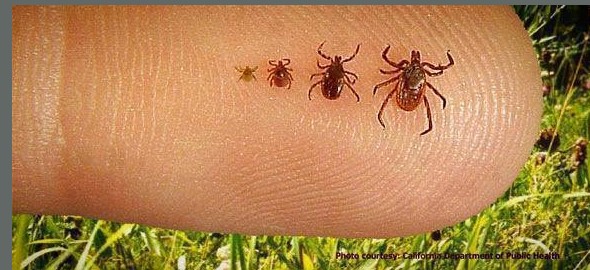 Roger Howard photo creditThe little one is in the first stage and would normally use a small rodent as a host. But that doesn't mean it can't bite you and give you Lyme disease.
The bacteria: Borrelia Burgdorferi 0.2 - 0.3 micrometers wide 15 - 20 micrometers long
 Photo Credit: Janice Haney Carr
This spiral shaped baceria moves from the tic into your blood stream as the tic injects his saliva into you in preparation for removing your blood which is the tics food source. The tail or flagellum of the bacterium is wraped around its body from one end to the other giving it this spiral shape. By flexing the flagellum the bacterium can move in a wave movement which gives it extraordinary ability to move through your bloodstream and tissue (skin, muscle etc).
You may or may not have this bull's eye rash appear at the site of the tic bite it is a tesatament to your innat immun system and a further testament to the bacteria's ability to evade your immune system !
 This erythema pattern reflects the response of your inate immune system as it tries to kill off the borrelia bacteria. During this period T Lymphocyte cells will be ingesting the bacteria and tearing it apart and then taking small proteins from the surface of the bacterium, hence 'surface proteins' and displaying these bacteria proteins on the T Lymphocytes own surface. This T cell is the part of your immune system that sends out the allarm to the rest of the immune system and shows the other immune cells a piece of the 'invader' so that they will recognize it and know who the enemy is.
Then the B lymphocytes begin to manufacture antigens, which are protein structures that attach to the bacteria and cover its surface so that it can not continue exist in your body. It recocnizes the bacteria by recognizing the surface protein that the Tcell showed it. But Borrelia bacteria keeps changing the type of proteins on their surface. The proteins that were there in the first few days after infection are not the same as the ones present ten days after infection and the proteins present ten days after infection are not the same as those that are present two weeks after infection. This is how the Borrelia bacterium avoids detection by your immune system and it is also how the borrelia infection avoids detection by tests that rely on immune aglutination (antibody recognition) of a specific cell surface protein from the Borrelia bacterium.
There are tests that identify genetic material from Borrelia. They are call Polymerese Chan Reactive (PCR) tests. These test offer a test tube generation or replication of a certain piece of Borrelia DNA replicate that has been provided by a laboratory. The blood sample from the patient is place in the test tube and if the replicated peice of DNA finds a match in the patient's sample then the solution and conditions in the test tube will allow the DNA to replicate and produce more and more peices identical to the original one provided. The size and weight of the innitial piece is known and is distinctive. If the replication has produced more identical pieces, then the blood sample contained the DNA of Borrelia and the test is positive for infection. Beacause this test is complicated it needs to be done by a trained microbiologist and so it is expensive. Our universal healthcare system is not happy to spend this much on a test. It seems it will be cheaper to treat all suspected cases with a long term treatemnt of Doxycycline antibiotic.